Tuesday, 22 April 2014

The Road

With our luggage packed (including fatty bumba, our pet mouse) Jon and I drove from Tamworth, Ontario to Edmonton, Alberta where the new adventure begins! 

We took highway 17 through Ontario, we had anticipated see lots of wildlife on the way so we had the binoculars at the ready. After hours of only seeing crows and jays we had a coyote cross the road ahead of us. We were about to give up hope of seeing anything interesting on our first day when we came across two moose! We turned around to take pictures but these moose had played this game before and where already disappearing into the trees.  

Many, many trees later we arrived in Wawa. We found a nice motel with log cabins and temperamental wireless internet . But despite the luxuries it still felt as though we had just rocked up in Churchill or some other polar bear paradise. The nearest town to Wawa was over 2 hours away and it was around 10pm when we found ourselves hauling luggage from the car in the icey cold wind and snow. 


We drove past Lake Superior just as the sun was setting.


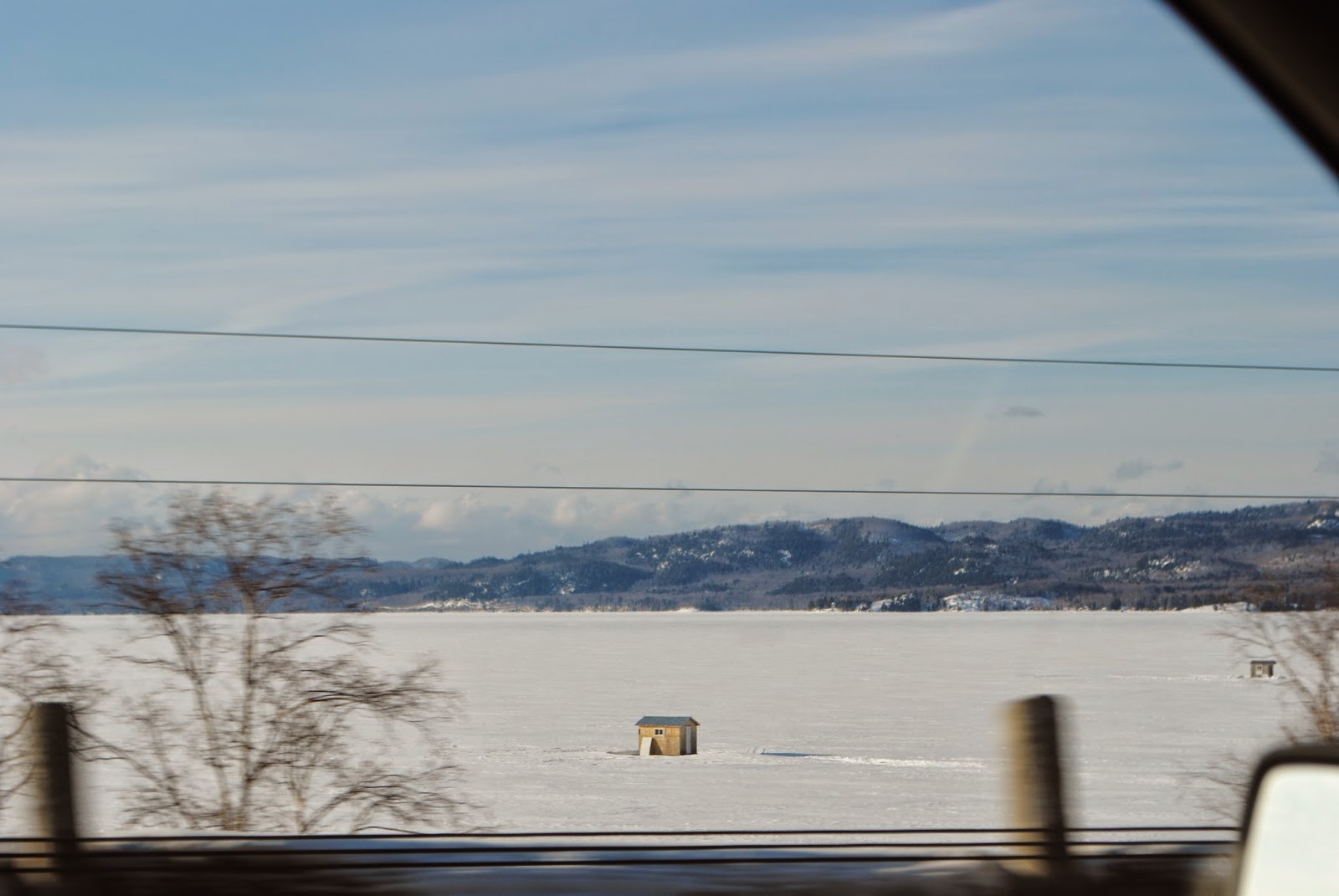
A very frozen, Lake Superior


Our next stop was in Winnipeg, Manitoba. It was too dark for photos when we finally emerged from the trees and reached the flat plains of Manitoba. Fatty - our mouse, was unfortunately not welcome in the hotel. Had we left him in the car we would have found a very small mouse-icle the next morning so we emptied out a biscuit tin (thanks grandma) and smuggled fatty into the room where he spent the night in the bath tub playing on his wheel.  


On the third day we crossed over into Saskatchewan and we stayed over in Saskatoon. There were fields of snow as far as the eye could see with a few farms and grain silos. 


 2,180 miles ish and 4 days later we had made it to Edmonton where I started training for the Ferruginous Hawk study field work.  

Jon and fatty arrived in Vancouver 10 hours later. They saw huge herds of bighorn sheep as they passed over the Rockies and a few bald eagles. 


Clearing up


It's been a long winter. Before the heavy snowfall in January Jon and I were out most days cutting and piling trees so that when the shrikes return to breed this spring they will find less predators lurking in the trees and more open grassland to hunt for food.

Suitable nesting trees were identified and left for shrikes. Here are some before and after shots of the fields.


These small trees were encroaching on the release site around the release cages. The young shrike are particularly vulnerable to predation so keeping these spaces open is particularly important.


Finally the snow is moving on and I have also relocated! As much as I love the shrikes and the alvar habitat I couldn't help but pursue a new adventure. This summer I will be working with the University of Alberta with another endangered species, the Ferruginous Hawk!


Stories of my hawk adventures coming soon!

Friday, 20 September 2013

Onto the next one

The Shrikes have now moved on and so must I. My role as Captive Technician for the Wildlife Preservation Canada Eastern loggerhead shrike breeding programme is now over and the wild Shrikes are making there way down to the South Western States in America. Soon we will start seeing the arrival  the Northern Shrikes (Lanius exubitor meaning "Butcher watchman") - a slightly larger cousin of the Eastern variety that occupies the same habitat but over the winter. This species is not endangered and spends the summer further North in arboreal forests.

But even though the endangered  Eastern Loggerhead shrikes aren't here, there's still lots to be done! I've relocated to Tamworth near Napanee (Ontario) to help Shrike Biologist Jon restore some fast diminishing shrike habitat. The problem here is invasive red cedar. Shrikes need open areas of short grassland to hunt prey and avoid aerial predators that nest in big trees, but the red cedar is fast growing member of the Juniper family and is quickly turning grassland in forest. The reason for this is partly due to a lack of a lack of grazing cows to keep the shrubs down. Farmers that used to ranch cattle here can no longer afford the ranching way of life, "there's just no money in it" one local farmer told me. Large scale cattle ranches have out competed the farmers here, now a lot of the cows seen on the Napanee alvars are owned by hobby farmers.

We are tackling the cedar with a brush saw. They are safer than a chainsaw and don't require the same expensive safety gear.  


I've also been helping out local Design business Bon Eco http://www.bon-eco.com/index.html with an art installation for the town.

Designed by Hans Honnager at Bon Eco, these silhouette ice hockey players - inspired by classic silhouette garden ornaments -are now painted black and will soon be on the corner of Concessions road, Tamworth.


Here is one in Bon Eco's shop window.


Carolyn and Hans at Bon Eco turn garbage into works of art, clothing and furniture.

Gladiator vest made from old tires and inner tubes.


 Mirrors made from old tire


Leaf lamp


Wall piece made from tires


 I've already learnt a great deal from them on how to work with tires, inner tubes and with a variety of tools and their work is truly inspiring!

Friday, 6 September 2013

The release!

Release day is an early start for everyone involved. A few volunteers and friends joined us to help monitor the birds once the doors are opened. We met them at the gate at 6:30 before settling down with spotting scopes, notebooks and clipboards behind bushes and long grass for a hidden vantage point.

Firstly, a dish of mealworms was placed on the outside of the cage on a platform to entice the birds out, then around 7am the release doors are opened, one bird made an instant bid for freedom and disappeared into the hawthorn scrub behind the cages. The others were less eager and hung back in the cages for around half an hour, we were just starting to question whether they even realised the door was open when one of the bossier fledglings began chasing his cage mates who eventually found the exit. Branches were attached to the outside of the cages to give the birds a place to perch whilst they got used to their surroundings and the birds darted from the outside cage perches back inside until they were confident enough to venture for a hawthorn a few meters from the cage. Before we new it all birds were out and had begun pestering a nearby captive pair of nesting shrikes.


 Bold and unphased, the birds chased one another playfully in nearby bushes.


After an hour or so we leave the birds to it. We will return in 2 hours to monitor their progress. Supplemental feeding continues for a few weeks post-release until the birds are able to source their own prey. Most were seen hunting wild prey after only a few days, which is not surprising given the recent explosion of cricket numbers in the field.

The cold snaps in the air trigger the birds to move on to their overwintering grounds. Some are carrying geolocators to record their migration path. We wish our birds good luck and keep a positive outlook that they will return next year and be able to provide us with that vital information.


Saturday, 13 July 2013

Banding

Our fledglings are now 4 weeks out of the nest and separated from their parents. It's only 2 weeks until release day but firstly each bird must receive a silver band with a unique number for long term identification, colour bands to identify individuals once released and geolocators as part of a study into their migration routes.

Field Biologist Hazel carrying the boxes and net to transfer the fledglings into their release cages


Next up is the banding and measurements - Here's me applying the steel bands


Hazel weighing a shrike in our specially designed shrike weighing tube. Normally a bird would be placed in a bird bag to weigh them but shrikes have too much fight in them and would exhaust themselves thrashing around in the bag.So instead we have an elastic band and a toilet roll. It works a treat!


Each bird gets unique colour markings before they are released into the release cages. This enable us to identify each bird easily during our daily observations. The birds will moult these feathers before migration so luckily for them they wont look silly forever.This one is blue cheeks!


Geolocators are small devices that the birds carry like a backpack. They take readings of the suns position and when this information is put through a special programme it can tell us where the birds have been. Unfortunately the birds have to be caught to obtain this information - satellite tracking devices are too heavy for the birds to carry Our hope is that next year we will recapture some of these birds and finally find out where they spend the winter. We already know they travel to North Western USA but once we know exactly where and what habitat then we can start our efforts to protect it.

There are fewer the 100 Eastern loggerhead shrikes in the wild so this study could save them from extinction!


Applying colour bands


Some just like to show off!

And much to mine and Steph's surprise.. it's Christmas at the cabin! We finished up our days bird feeding duties and returned to a cabin full of old tacky Christmas decorations, garland and a very excited Hazel jumping around with mitts and a woolly hat playing Christmas songs on her phone. Oh and presents on the table! Lovely! 


Wednesday, 3 July 2013

Preparing for release!

The fledglings are growing fast and release day is creeping ever closer. Firstly the fledglings are banded and given a health check, then are transported to their release cages with extra high perches to encourage them to strengthen their wing muscles.


This year geolocators will be attached to some of the fledglings in hope that if they return next year after migrating, they can be caught and the information in their geolocators can be extracted. This will tell us where exactly in the South Eastern US they migrate to and spend the winter. Currently this is a knowledge gap that If filled will greatly increase the chances of this species successful recovery. Some fledglings however will be kept behind and retained for the captive breeding population.

Just over a week ago we had a storm with hail the size of marbles. I sat in the cabin biting my nails with worry about the fledglings getting pummelled with icy bullets. After the storm passed I check up on our closest cage. As I feared the fledgling was sat out in the open and had't attempted to get under cover. Thankfully though it seemed unharmed and on checking the other cages the next morning everyone seemed fine. Sadly though a female nighthawk that had nested just outside one of the cages was not so lucky. Being a ground nesting bird she had laid her eggs directly on the ground out in the open and was unable to sit tight during the storm. The next morning she has abandoned her eggs, both had died just as they had started to hatch, one even had it's egg tooth poking through the shell. It was a sad reminder of how vulnerable wildlife can be.

Hazel watching the storm rolling in.


On a brighter note, we have a new shrike team mascot - Maddy.


And this is bunners, a wild hare possibly a jackrabbit that decided to join me in the feed room whilst preparing the shrike food one morning. I gave him some apple and after a few bites he jumped towards me, sniffed my shoe and then quickly hopped away. I don't blame him.


Friday, 21 June 2013

Fledglings

The shrike hatchlings have jumped the nest and are now flying around their cage units learning to hunt for themselves. Live mouse training begins one week after fledging and although none have managed to catch one for themselves yet they have been watching their parents closely for hunting and impaling techniques.


 We have 15 fledglings in total and the parents have already started nesting again. They have to be quick though because after the end of the week we have to separate the pairs if they haven't started laying, otherwise their second clutch young will be born too late in the season and won't gain enough weight and strength before the migration.


We have given a few tours recently. One to a group from the Carden nature festival, the Guelph Field Naturalist group and some friends of the site land owners.

Here's me showing off the mealworms.

Jess my Boss and Hazel the site Biologist.

Steph the Field Assistant

Viewing the captive shrikes through spotting scopes

 It's not long until we release the birds now. Some will be retained for the captive population but all are banded and health checked. More pictures of cute shrike fledglings coming soon.

The alvar at dusk