Friday, 21 June 2013

Fledglings

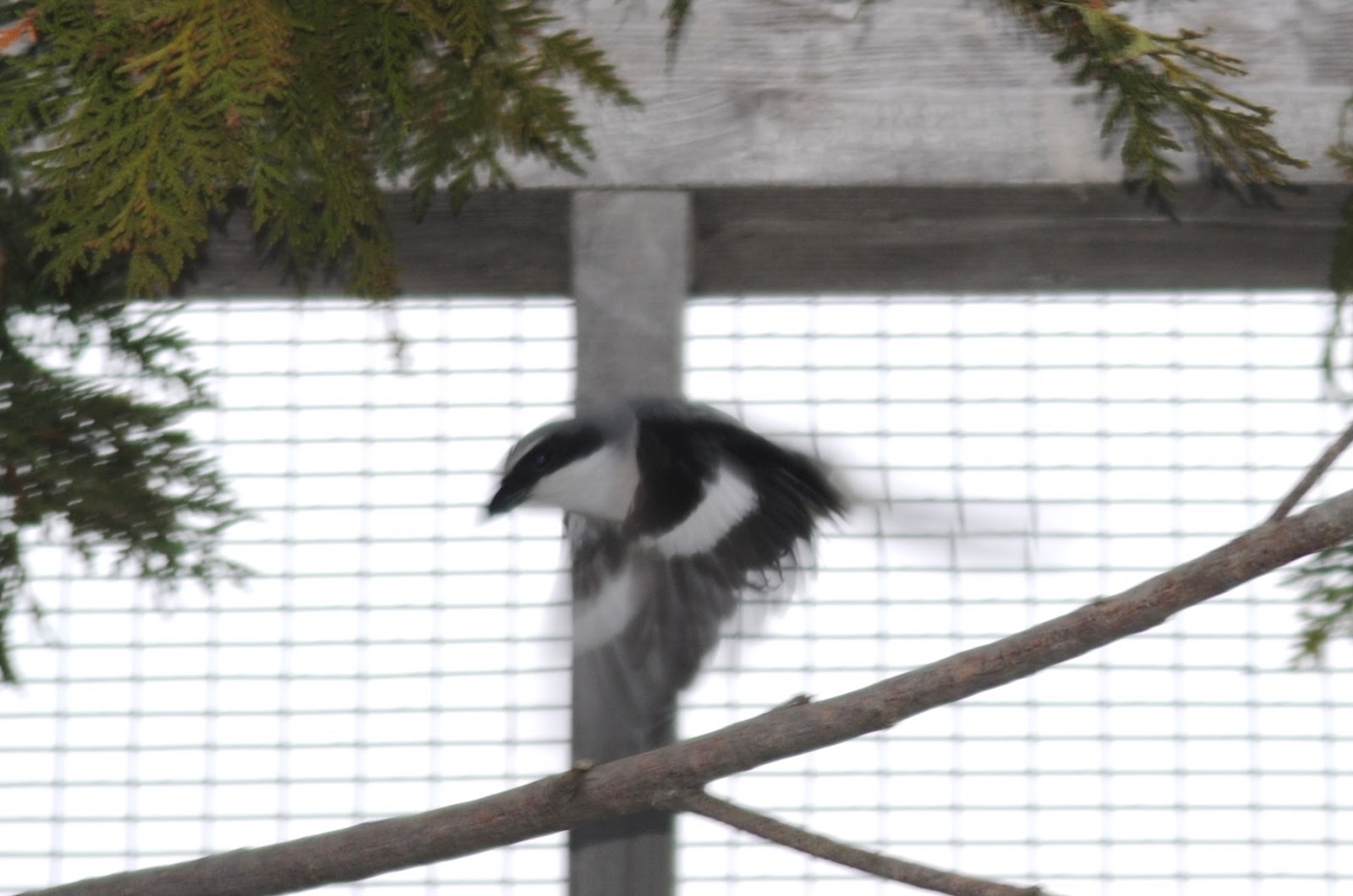
The shrike hatchlings have jumped the nest and are now flying around their cage units learning to hunt for themselves. Live mouse training begins one week after fledging and although none have managed to catch one for themselves yet they have been watching their parents closely for hunting and impaling techniques.


 We have 15 fledglings in total and the parents have already started nesting again. They have to be quick though because after the end of the week we have to separate the pairs if they haven't started laying, otherwise their second clutch young will be born too late in the season and won't gain enough weight and strength before the migration.


We have given a few tours recently. One to a group from the Carden nature festival, the Guelph Field Naturalist group and some friends of the site land owners.

Here's me showing off the mealworms.

Jess my Boss and Hazel the site Biologist.

Steph the Field Assistant

Viewing the captive shrikes through spotting scopes

 It's not long until we release the birds now. Some will be retained for the captive population but all are banded and health checked. More pictures of cute shrike fledglings coming soon.

The alvar at dusk

Tuesday, 11 June 2013

Hatchlings


Our 4 pairs of shrikes have been sitting tight incubating their eggs for the past 16 -18 days which was very sensible of them since we narrowly avoided 2 hurricanes in one week! Thankfully no nests or birds were harmed and the gusty winds and heavy rains are starting to settle down again. The shrike nests are checked a few days after the expected hatch date to ensure the chicks have hatched, are healthy and for a fledging date to be estimated. On checking the first nest due to have hatched I found 5 hatched chicks plus 2 eggs which. The first nest check for this nest revealed only 5 eggs so the extra 2 were a nice surprise. The hatchlings appeared about 1 day old and hopefully their unhatched siblings are not far behind them.


 It will be just over 2 and a half weeks until the first chicks begin to branch out and explore outside of the nest. Then the number of birds in my care will drastically increase and the fun really begins! 

One of our pairs showed no signs of nest making or courting so we swapped the female in hope that the male would take more interest this time around. Once caught, handling is kept to a minimum to reduce stress but we just had time to take a quick shot of the female who will be leaving us and returning to Toronto Zoo. She will most fondly be remembered for her ability to catch and impale wild snakes and beetles which always made the morning feed round more interesting.

I've nearly tripped over a few snakes in the past few weeks, since Canada's only venomous snake is the Mississauga rattler - easily identified by it's rattle- I thought Id take the opportunity to improve my snake handling skills. So here are a some snakes I managed to get a few shots of.

Eastern Gartersnake (Thamnosis sirtalis sirtalis)

Found in a range of habitats, gartersnakes are common throughout Ontario and can reach 1 meter in length. At a glance a young garter snake can be confused with Butler's Gartersnake (Thamnosis butleri), a threatened species also possessing 3 whitish stripes. The Eastern garternsnake can be identified by a scale count, the lateral white stripes being confined to the second and third scale rows.  

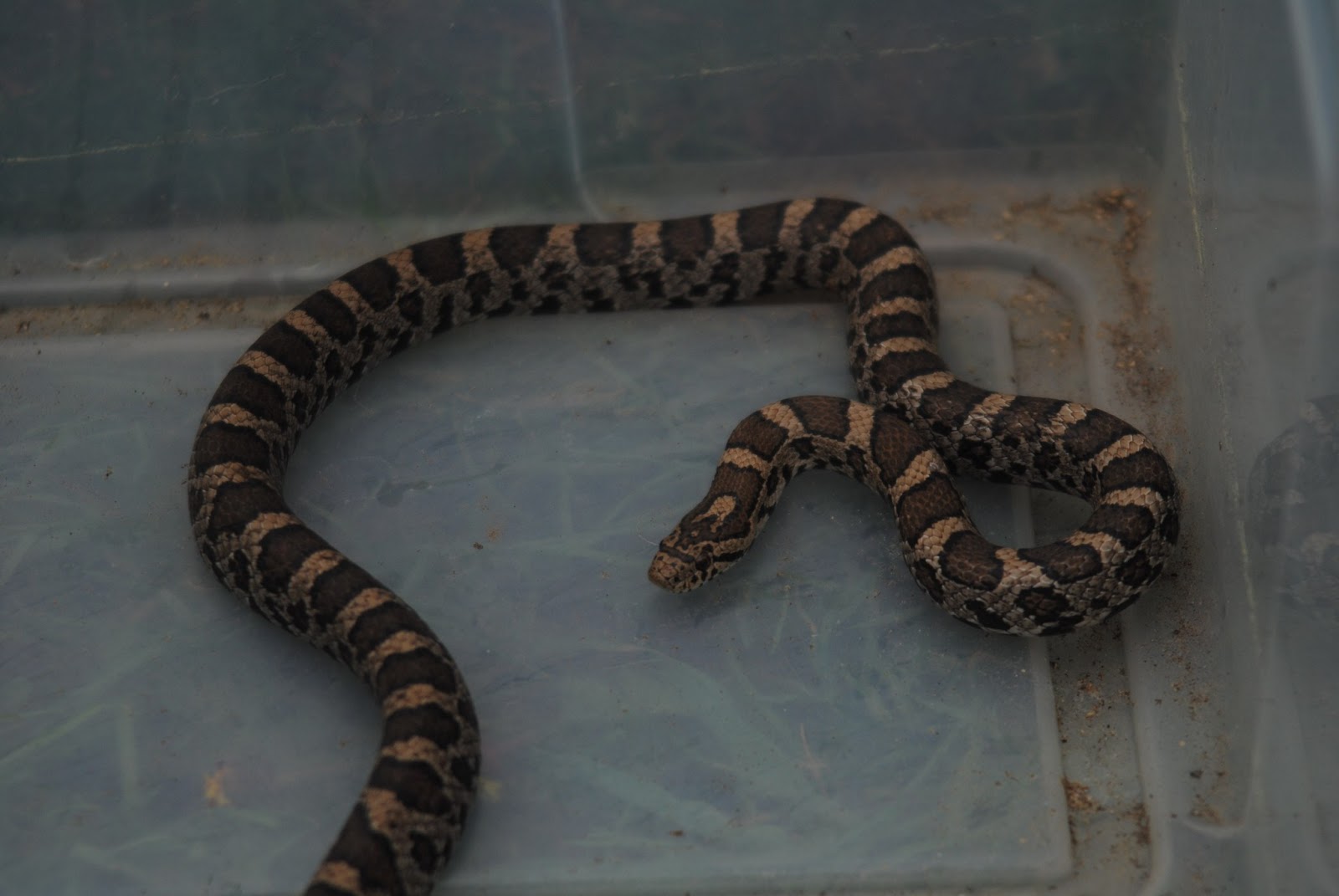
Eastern milk snake (Lampropeltis triangulum)


 Milksnakes have a similar pattern and colour as the Missasauga rattler and like this individual did, will often vibrate their tail in  rattle-like fashion.  Found in fields, rocky outcrops and rural habitats, this snake earned its name from the false belief that it drank the milk of the cows in the barns it resided in. In reality they much prefer eating mice.

I spent my time off at my cousins cottage again. We took a canoe trip down Eel Creek where we took on a lot of water and almost capsized. We portaged around 4 large rapids, risking 3 other sections where we grounded the boat on a large rock but stayed afloat none the less. 

This white-spotted sawyer beetle (Monochamus scutellatus) was hanging out on the deck this afternoon. Initially my cousin Bridget went to squish it thinking it was the invasive and highly destructive Asian longhorn beetle that attacks conifers. This species however is a common wood-boring beetle found throughout North America, so we left him alone to do his thing.


So the next few weeks will be filled with lots of baby birds. One week after fledging they will begin their live mouse training where they learn to behave like wild shrikes and feed for themselves.
  
Life at the cabin is pretty relaxed and the sunsets are rarely disappointing.
   

At dusk a few days ago, our Field Biologist Hazel called me over to witness the unusually large moon rising.


Friday, 3 May 2013

Shrike arrival

After two and a half weeks of manic preparation, the Eastern loggerhead shrike have finally arrived to the Carden field site from their overwintering facilities. The shrike pairs are initially housed in separate units with access to each other via a shared mesh wall. As well as tending to the shrikes every need, part of my day is spent observing the birds behaviour. Before the pairs can be introduced to one another courtship behaviour must be observed which includes the pair singing and the male courtship feeding the female through the shared mesh.


So far 8 birds have formed 4 pairs and are well under way in building their nests. some of the males started nest building before they were even introduced, one male tested out 5 out of 6 of his nest cups, lining them with a few twigs and nest hair.

Our accommodation is pretty rustic, we have running water and electricity when we turn on the generator but this uses lots of fuel so we usually do our evening paperwork by head torch. I live with Hazel, the Shrike field biologist who monitors the wild shrikes, and Steph the field assistant who spends 2 days a week helping me with the captive shrikes and the remainder of the week monitoring the wild birds also. We are looking forward to some quiet evenings around the camp fire.


On my days off I visited Bridget at David's parents cottage near Lakefield. It's beautiful up here and wildlife is never far away. David took me out on a boat trip around Deer Bay where we saw two osprey fighting off two bald eagles that got too close too their nest. Unfortunately I didn't have my camera with me!

Today we visited Petroglyphs National Park , within seconds of leaving the car we came across this prehistoric fellow.


Snapping turtle Chelydra serpantina

A few minutes later we had to rein in the dogs again as a pocupine shuffled around in the bushes. My arms were full with small dogs so I couldn't grab my camera!

Next up we almost jumped out of our skin when we saw this beaut!


Eastern hog-nosed snake (Heterodon platirhinos)

When threatened, the Eastern hog-nosed snake behaves like a cobra by flattening it's head, rearing up and hissing but is actually non-venomous. 


Then was this slightly less ominous ribbon snake, a close relative of the garter snake sharing the ability to bear live young.


Northern ribbon snake (Thamnophis sauritus septentrionalis)

We stopped off at a small lake to let the dogs have a swim and to feed Oliver.


And finally, the view from the cottage, it's been nice to hear the call of the loons at night again.


Friday, 26 April 2013

The Carden Alvar

I've finally arrived in Carden, home of the critically endangered migratory predatory songbird, the Eastern loggerhead shrike or ELOSH (Lanius ludovicianus migrans).

(ELSOH - image from the Nature conservancy of Canada)

Crickets, mice, other birds and even snakes are all on the menu for these feisty passerines. Since they lack the talons of other predatory birds they must impale their prey on something sharp and as a result they tend to seek out habitat with hawthorn and black thorn. Their eating habits are locally well-known especially by farmers with barbed wire fencing, 

The reason for the decline of this species is uncertain but is likely a combination of habitat destruction, use of pesticides and collisions with cars. Monitoring and conserving a migrating species is notoriously difficult. The wild ELOSH in Carden have spent the last 6 months in the Southern US where there are only a few places left where this species of shrike are known to breed. 

The Carden plain is on an alvar, a unique and rare habitat consisting of limestone bedrock and a thin soil cover. Since large trees can't get a stronghold here, the majority of the trees are hawthorn, red cedar and poplar. Characterised also by it's grasses that are kept short by cattle grazed on the land by local farmers. The Couchiching Conservancy work hard to conserve the alvar through controlling invasive species and recruiting volunteers. Visit their site here to find out more about the alvar, it's rare ecosystems and the work being done to help protect it.

The ELOSH I'll be working with a part of a captive breeding and release programme, my job will be to take care of 6 pairs this field season in purpose built captive breeding aviaries.

So here it is, my new office. The breeding cages are hidden by the tree line at the back of the field. Soon we will be joined by grazing cows that will help to keep the grass down playing a critical role in helping the shrike spot their rodent prey in the short grass.


For more information on the recovery programme get clicking here.

Firstly we must prepare for the birds to arrive from their overwinter facilities. This involves cleaning out their old field aviaries, taking out old branches, fixing anything that has worn out over the winter and then furnishing the cages with fresh branches, nesting cups and hawthorn branches for them to impale their prey upon.


Here is our stick transporting device and wheel-barrow for tools. Unfortunately 3 days after buying this new barrow (that took half an hour to set up) we got a hawthorn induced flat tyre. This minor set back and a few other minor set backs mean it will be tight for time getting the cages ready before the shrikes arrive in a few days time!

So when the birds arrive I will begin observing their behaviour. To start off the males and female will be in separate enclosures but able to see each other, once I observe the pair courting, the door between their enclosures gets opened they get introduced and hopefully get busy building a nest.

So until I have some shrike pictures to post, here are some other wildlife I've pulled over to get pictures of whilst driving to and from the field site.


Turkey vulture (Cathartes aura)


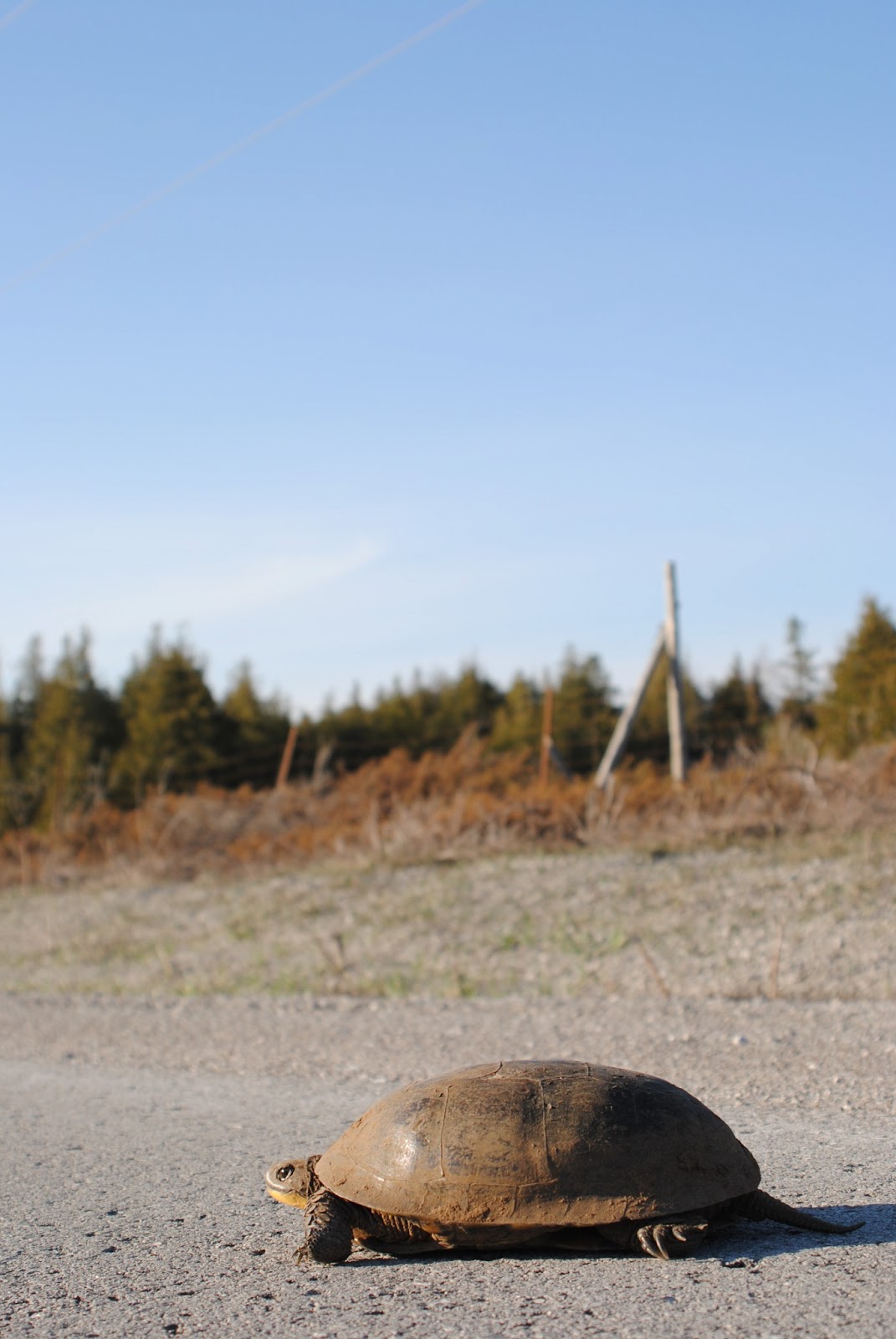
Blanding's turtle (Emys blandingii) - listed as endangered


Osprey (Pandion haliaetus) 

And finally some nice sunsets seen from our cottage window overlooking the lake Dalrymple


Thursday, 4 April 2013

Belleville

My second stop in Belleville involves visiting my nan (aka Omi) and Grandpa who live next to a bay that is connected to Lake Ontario. The bay was still frozen when I arrived and appeared vacant other than a few confused looking geese that were sitting awkwardly on the ice.


Thanks to Omi's multiple bird feeders her deck has become a twitchers paradise, here are some frequent visitors.

Redpoll  


Hairy woodpecker


White breasted nuthatch 

It was -2 and clear skies as I sat out on the deck this morning with the sun in my face and a cup of tea in hand. The ice melted overnight and the bay is now completely open. The diving ducks are ducking and diving just off the shore including hooded, common and red breasted mergansers, golden eye, buffleheads, and a single loon. Bravely fluttering between a nearby weeping willow and the feeder opposite me are white breasted nuthatch, goldfinch, red polls and black capped chickadees. But there's something missing and we've been speculating about their return for a few days now. Usually they come a few days after the bay is open Omi tells me, and start building their nests up high on a platform mounted upon a dead tree. Then something swooped up high near the shore creating a shadow above us, the wingspan is broad but my instinct tells me this isn't just another turkey vulture. As it soared into view my suspicions were confirmed and with the sound of a distinct whistling cry Omi and I looked at one another and smiled, the osprey are back!

The Osprey nest has a webcam over it which will be switched on in a few weeks time once they start nesting, click here to watch them raise their chicks live! The log in name and password is guest.


A lady selling wool brought her alpaca to the local garden centre for a day and I know have an alpaca scarf courtesy of Omi. If the weather doesn't start perking up I'm definitely going to need it!


Six turkey vultures were blown above the bay during high winds today. After battling with breeze for 5-10 minutes they managed to land on the grass and catch a break for a while before taking off again.


I still have a just under a week left before I head to Carden so I'd best get back to swatting up on birds!

Wednesday, 27 March 2013

Toronto

My latest adventure starts in Toronto!

I am fortunate enough to have lots of family in Ontario and so my first stop off is with my Grandma in Toronto. At home in West Yorkshire the weather was hinting at getting warmer when I left so at first I was a little disheartened to be arriving into a cool -2°C with lows of -8°C and with snow showers forecast for at least the next week.


One week on and it's 6°C and fairly sunny here in Toronto, at home in England my family are snowed in with over 1 meter high snowdrifts on the only road to civilisation and are having to use a sledge to get bales of hay down the fields to our two highland cows. 


Catching up with the family  in Toronto has been great - I met my new 3 week old cousin Oliver for the first time.


And I got to hang out with Buzz Lightyear! ...aka cousin Robbie or Little R.


My Grandma also took me to the Distillery District. Once a Victorian distillery, the prominent red brick buildings could have you fooled into thinking you had somehow been teleported back to England. The feeling is however short lived as your eye is quickly drawn to the towering apartment buildings in the background. The distillery buildings are now host to a range of art galleries, coffee shops and the type of shops that sell overly priced cards and ornamental soaps. After purchasing some of these cards, Gram and I picked up some exceedingly good Eccles cakes then headed to Balzac's coffee shop to warm up.


Winter in the city doesn't necessarily mean there isn't wildlife about. House sparrows and cardinals are some of the regulars at my Gram's feeder.


As I stood in the bathroom brushing my teeth one morning I stared out of the window only to find I was being stared back at! It turns out my Gram's windowsill is a great spot for squirrel sunbathing.


Next stop Belleville to see more family and to finish getting organised for my new job!!